
A few months ago, I was selected to by a sustainable volunteer program to travel to Tanzania Africa this December. In preparation for the trip, I have been learning about the culture, the laws, and the travel requirements that I will have to adhere to during my adventure. Since I am a UAS student, I am particularly interested in how Tanzania is using UAVs to serve it’s people. Therefore, this post is about Tanzania’s UAS applications.
Table of Contents
Part 1---------------------------------------------------------------------------------------------------Fighting Malaria with UAS
Part 2--------------------------------------------------------------------------------------------------Delivering Blood with UAS
Part 3------------------------------------------------------------------------------------------Intercepting Poachers with UAS
Part 4----------------------------------------------------------Utilizing Local Resources to Construct a UAV Airframe
Part 5-------------------------------------------------------------------------------------------------------Tanzania Aviation Law
Part 6-----------------------------------------------------------------------------------------------------------------------Conclusion
Fighting Malaria with UAS
Depicted in Figure 2 is a DJI Agras MG1-S spray UAV in Cheju, Tanzania. Taken from an article in Forbes Magazine, this specialized platform is designed to fight malaria which is responsible for killing 80,000 people per year. according to malariaspot.org. As being considered one of the first UAS based biological control applications in the world, could a UAS with operating limitations make a faster more cost-effective spray then manual spraying efforts? For more information, click on the figure to be directed to the article.

Figure 1: Source Tanzania flying Labs
Sounding more like a vampire program than a UAS program, a UAS collaboration consisting of Wingcopter, DHL, and the Deutache Gesellschaft fur Internationale Zusammenarbit (GIZ) have utilized a vertical take off and landing platforms (VTOL) to deliver blood and medical supplies to difficult to reach areas in Tanzania. Similar to efforts taken by Zipline, this method of UAS operation can help doctors save lives because instead of taking 4 hours to transport medical supplies, a Wingcopter can make the delivery in 20 minutes. To learn more, click on Figure 3 and you will be directed to their promotional video. Within it, notice how the doctors appear to be holding a transmitter upon landing of the aircraft. Why do you think they are doing that?

Figure 2: Link to DHL Wingcopter Video
Taken from Drone blog.com, Tanzania has an anti-poaching initiative that involves flying UAVs over national parks, reserves and other protected areas to help security track and intercept poachers. Depicted in Figure 5 is Super Bat Da 50 UAS in front of the UAS crew and security personal. A product by Bathawk Recon this system can not only stay in the air for 8 hours, but it has several sensors that claim to be able to easily track poachers before they arrive to the animal heards. Could this be an effective tool to combat poaching? Or is this another example of overrated technology taking advantage of Africa?
 |
| Figure 3: Superbat Da 50UAS |
Taken from spectrum.com, Figure's 4 and 5 depicts Bornlove Ntikha using bamboo for the frame of his DIY UAV. Ntikha wants to show that UAVs can be built out of locally available materials which can help others learn how to construct UAVs themselves. Although this technology still requires a motherboard, a transmitter, batteries, and motor components, it is remarkable to see this take flight. If a sensor can be integrated to this platform and the UAV can be programmed to fly autonomously, nobody will care about the type of airframe as long as the UAS can perform missions safely and produce deliverables. Could this method of constructing UAVs be applied to more local Tanzanian UAS projects?
 |
| Figure 4: Bornlove Ntikha Working on a DIY UAV Using Local Resources |
I am not an expert on Tanzania’s aviation law, nor am I an expert on how to interpret it, however if you are curious to see what UAS policy’s I have created a bullet list of Tanzania’s UAS laws that I could find online. In other words when regarding flying in Tanzania, you should consider the following:
- UAVs weighing Unser 15.5 lbs do not require a permit to fly
- UAVs weighing over 15.5 lbs require a special permit from the Ministry of Defense
- UAVs require insurance no matter recreational or commercial operation
- Class 1: 0-11lbs
- Class 2: 11 – 55lbs
- Class 3: 55 lbs and more
- Category 1: leisure and sport
- Category 2: private use except leisure and sport
- Category 3: commercial use
- https://static1.squarespace.com/static/59311e48bf629a7d92b39065/t/5a574bca53450ad102603b6e/1515670486660/AIC+05+-+2017+Unmanned+Aircraft+Systems.pdf
- https://www.tripadvisor.com/ShowTopic-g293747-i9226-k10180983-Use_of_drones_in_Tanzania_not_in_NPs-Tanzania.html
- https://uavcoach.com/drone-laws-in-tanzania/
- https://africandrone.org/tanzania
Although it each UAS application in Tanzania is powerful, interesting, and can hopefully benefit the greater good, I favor Nikha’s story the most because he is an example of Tanzania’s self sufficiency as it will hopefully be able to one day create UAS technology rather than contract out to other countries. Nevertheless, each article as well as the Tanzanian government’s efforts to regulate the UAS operations within the country demonstrate that UAS has the potential to grow in Tanzania.
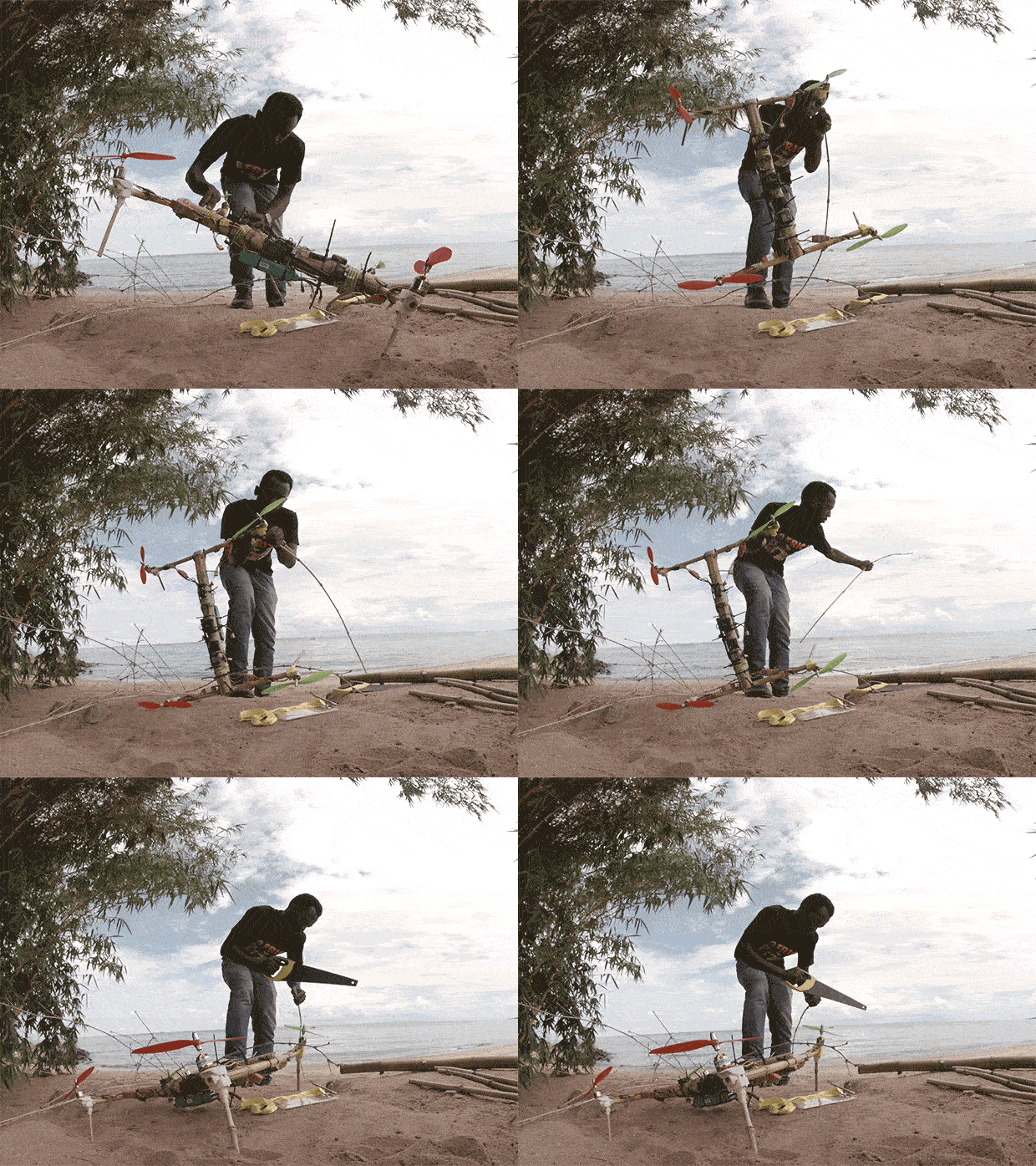
Figure 5: Bornlove Ntikha Assembling his DIY UAV


